
ANESTHESIA ESSENTIALS

Anesthesia Essentials isn’t just another CE course. It’s a training system for your hospital.

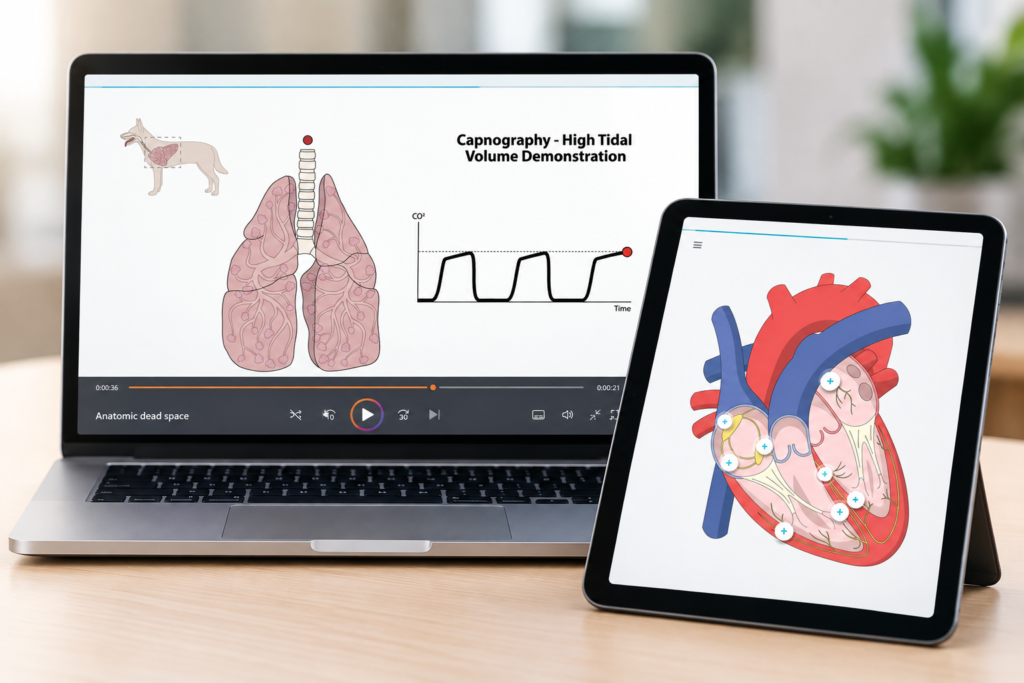
A 12-hour, RACE-approved online program designed to build a consistent foundation in anesthesia across your clinical team, improve patient safety, and support confident decision-making in real-world veterinary practice.

ANESTHESIA ESSENTIALS

Anesthesia Essentials isn’t just another CE course. It’s a training system for your hospital.

A 12-hour, RACE-approved online program designed to build a consistent foundation in anesthesia across your clinical team, improve patient safety, and support confident decision-making in real-world veterinary practice.

ANESTHESIA ESSENTIALS

Anesthesia Essentials isn’t just another CE course. It’s a training system for your hospital.

A 12-hour, RACE-approved online program designed to build a consistent foundation in anesthesia across your clinical team, improve patient safety, and support confident decision-making in real-world veterinary practice.

12 HOURS
RACE-approved CE

WHOLE TEAM
Training

SELF-PACED
Online Learning

ANNUAL
Updates & Recertification

12 HOURS
RACE-approved CE

WHOLE TEAM
Training

SELF-PACED
Online Learning

ANNUAL
Updates & Recertification

Clinical Reasoning

Understand the why behind anesthesia decisions, not just which protocol to follow.

Built for the Whole Team

Give veterinarians, technicians, and support staff a shared foundation for safer, more consistent anesthesia care.

Designed for Real Practice

Turn core concepts into practical decisions your team can apply to real patients every day.

THE ANESTHESIA ESSENTIALS CURRICULUM

A Structured Foundation Across the Entire Anesthesia Process

Twelve hours of instruction across seven modules build a structured foundation across the entire anesthesia process, from patient assessment and preparation through induction, maintenance, monitoring, pain management, complications, and recovery.

🧠 Module 1: Introduction to Safe Anesthesia and Risk Management (1.5 hours)
  • Understanding anesthesia risk and the sedation–anesthesia continuum
  • Patient risk assessment and ASA physical status classification
  • Communicating anesthetic risk and expectations effectively with clients
  • Human factors and James Reason’s Swiss Cheese Model of accident causation
  • Situational awareness, workload, and task saturation during anesthesia
  • Communication strategies that improve patient safety and team coordination
  • Psychological safety and speaking up about concerns
  • Cognitive aids, checklists, and standardized safety procedures
  • The sterile induction rule and reducing distractions during critical moments
  • Post-incident debriefing, root cause analysis, and systems improvement
  • Practical strategies to strengthen anesthesia safety in everyday clinical practice
  • Understanding the purpose and function of the anesthesia machine
  • Oxygen sources, pressure regulators, flowmeters, and vaporizers
  • Circle systems, non-rebreathing circuits, and breathing circuit selection
  • Carbon dioxide absorption, dead space, and rebreathing physiology
  • Common gas outlet (CGO/ACGO) systems and oxygen flush valve safety
  • Scavenging systems and waste anesthetic gas exposure
  • Daily machine safety checks and leak testing
  • Equipment troubleshooting and recognition of common machine faults
  • Practical anesthesia workspace setup and preparation
  • The goals of anesthesia and principles of balanced anesthesia
  • Major classes of anesthetic and analgesic drugs used in small animal practice
  • Opioids, sedatives, induction agents, inhalants, and adjunctive drugs
  • Receptor pharmacology, potency, efficacy, and drug interactions
  • Patient-specific anesthetic planning based on temperament, disease, and procedure
  • Fluid therapy fundamentals and supportive care during anesthesia
  • Equipment preparation, airway planning, and warming strategies
  • Anticipation of complications and contingency planning
  • Building practical, flexible anesthetic protocols rather than memorizing “cookbook” recipes
  • Why pre-anesthetic preparation is critical for patient safety
  • Medical history, physical examination, and anesthesia-focused patient assessment
  • Identifying anesthetic risk factors and comorbidities
  • ASA physical status classification and procedural risk assessment
  • Breed-specific anesthetic considerations, including brachycephalic patients
  • Selection and interpretation of pre-anesthetic diagnostics
  • Fasting guidelines, medication management, and client communication
  • Preparation of monitoring equipment, airway supplies, and emergency drugs
  • Safe anesthesia induction principles, pre-oxygenation, and airway management
  • Structured induction workflow, intubation preparation, and transition into maintenance anesthesia
  • Goals of anesthetic monitoring and goal-directed anesthesia
  • Continuous monitoring during induction, maintenance, and recovery
  • ECG, blood pressure, pulse oximetry, capnography, and temperature monitoring
  • Interpretation of physiologic trends rather than isolated values
  • Physical signs of anesthetic depth and patient assessment
  • Understanding monitor limitations, artifacts, and troubleshooting abnormal readings
  • The anesthesia record as a patient safety and communication tool
  • Early recognition of anesthetic complications and physiologic instability
  • Integrating monitoring data into clinical decision-making
  • A structured approach to anesthetic troubleshooting and crisis management
  • Recognize → interpret → respond: systematic decision-making under anesthesia
  • Cardiovascular complications including hypotension, hypertension, bradycardia, and arrhythmias
  • Respiratory complications including hypoventilation, airway obstruction, and hypoxemia
  • Thermoregulation, hypothermia, and metabolic disturbances
  • Understanding the physiologic mechanisms behind common anesthetic abnormalities
  • Troubleshooting monitoring changes and identifying root causes
  • Early intervention strategies and prevention of crisis escalation
  • Pattern recognition and systems-based thinking during anesthetic complications
  • Why recovery is one of the highest-risk phases of anesthesia
  • Airway protection, oxygenation, and ventilation during recovery
  • Safe extubation criteria and endotracheal tube management
  • Recovery monitoring protocols and continuation of physiologic support
  • Recognition and management of airway obstruction, hypoventilation, hypoxemia, and dysphoria
  • Preparation for recovery complications and emergency re-intubation
  • Pain assessment and patient comfort during recovery
  • Recovery staffing, communication, and patient handoff procedures
  • Creating structured recovery systems that improve patient safety
BUILT FOR REAL-WORLD PRACTICE

A Practical, Structured Approach to Veterinary Anesthesia

Anesthesia Essentials covers the entire anesthesia process from patient assessment through recovery, with a focus on clinical reasoning, patient safety, and practical implementation. Designed for the entire clinical team, it builds a consistent foundation and helps team members apply key concepts in real clinical situations.

More than a one-time CE course, Anesthesia Essentials is designed to become part of your hospital’s training system: bringing new employees up to the same standard and keeping your team current through annual recertification, updates, and new training. With 12 hours of RACE-approved CE included, it helps maintain stronger anesthesia practices year after year, even as your team changes.

BEYOND THE CORE CURRICULUM

Ongoing Education for Long-Term Success

Annual Updates & Recertification

Keep anesthesia knowledge current as evidence, standards, and clinical practice evolve. Annual updates reinforce key concepts, introduce new material, and provide a structured pathway for ongoing training and recertification.

INCLUDED WITH HOSPITAL LICENSES
Additional Training Modules

Expand beyond the core curriculum with focused modules covering more advanced and specialized topics. New content can be added as training needs evolve, allowing Anesthesia Essentials to grow alongside your team.

INCLUDED WITH HOSPITAL LICENSES
ANESTHESIA ESSENTIALS
Better Anesthesia Training Starts Here

See why Anesthesia Essentials was built to help veterinary teams develop a stronger, more consistent foundation in anesthesia.

TRUSTED BY VETERINARY PROFESSIONALS
What Veterinary Teams Are Saying
BUILT FOR HOSPITALS

Simple to Implement. Easy to Manage.

Anesthesia Essentials is designed to fit into your hospital’s existing training and onboarding process, without creating another administrative burden.

Organize Your Teams

Group learners by hospital, department, or team to make training easier to manage across your organization.

Onboard New Employees

Add new team members throughout the year so everyone starts from the same anesthesia foundation.

Track Team Progress

Monitor learner progress and lesson completion across your organization through centralized reporting.

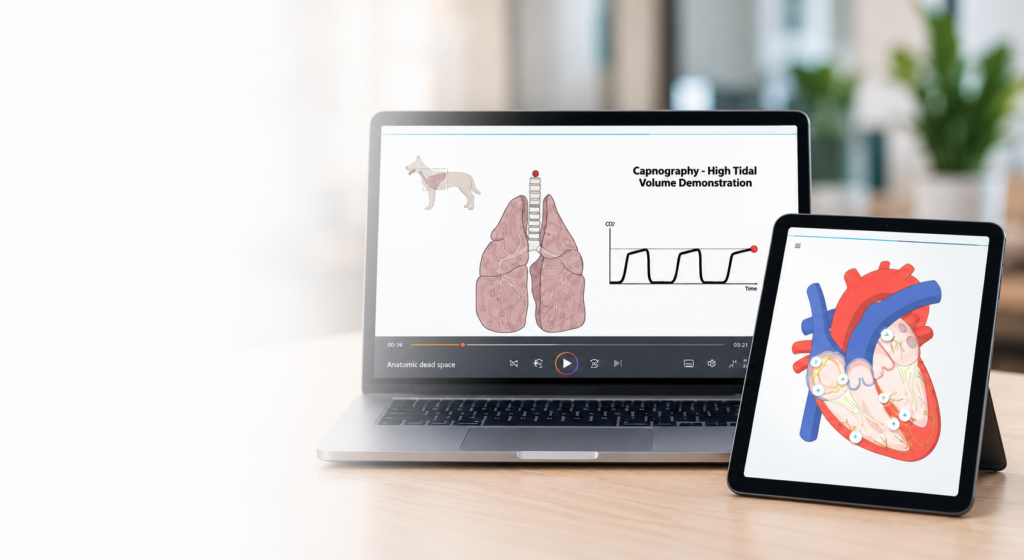
Flexible Delivery

Use the hosted Anesthesia Essentials platform or integrate the content into your organization’s LMS via SCORM/xAPI.

READY TO GET STARTED?
Anesthesia Training That Fits Your Needs
FOR VETERINARY PROFESSIONALS
Individual Access

Strengthen your anesthesia knowledge with the complete 12-hour, RACE-approved Anesthesia Essentials program.

FOR VETERINARY PRACTICES & GROUPS
Hospital Training

Build a consistent anesthesia foundation across your team with onboarding, progress tracking, annual recertification, and scalable options for multi-location organizations.

FOR VETERINARY & TECHNICIAN PROGRAMS
Academic Programs

Give students a structured foundation in anesthesia that complements your existing curriculum and prepares them for clinical practice.